What Does Your Blood Pressure Reading Mean? A Simple Guide to BP Numbers
Blood pressure is one of the simplest health measurements, but understanding the numbers can be confusing. What do readings such as 120/80, 140/90 or 160/100 actually mean?
Your blood pressure reading gives important information about how strongly your blood is pushing against the walls of your blood vessels. Understanding both numbers, knowing how blood pressure is measured, and recognizing when a reading needs medical attention can help you take better care of your health.
In this guide, we explain blood pressure numbers in simple terms, what different readings may indicate, how to measure blood pressure correctly at home, and when you should speak to a doctor.
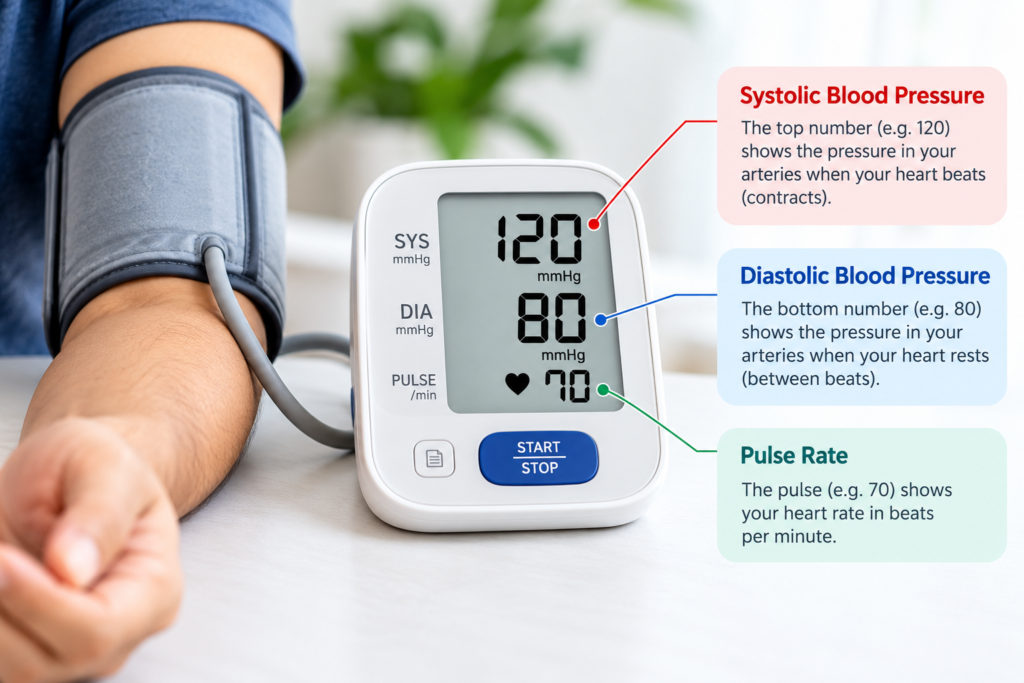
Table of Contents
What Do the Two Blood Pressure Numbers Mean?
A blood pressure reading is written as two numbers, such as 120/80 mmHg.
The top number is called the systolic blood pressure. It represents the pressure in your arteries when your heart contracts and pumps blood.
The bottom number is called the diastolic blood pressure. It represents the pressure in your arteries when your heart relaxes between beats.
The unit mmHg means millimetres of mercury and is the standard unit used to record blood pressure.
Both numbers are important. A person can have an elevated systolic pressure, an elevated diastolic pressure, or both.
What Is a Normal Blood Pressure Reading?
There is no single blood pressure number that applies to everyone in every situation. Blood pressure can vary with age, activity, stress, illness, medications and the time of day.
Different medical guidelines also use slightly different thresholds. For example, some guidelines define hypertension at 140/90 mmHg or higher when measured in a clinical setting, while other guidelines use 130/80 mmHg or higher as the threshold.
This is why a single blood pressure reading should not automatically be used to diagnose high blood pressure. Doctors generally consider repeated measurements, the setting in which the blood pressure was taken, and the person’s overall health.
A reading around 120/80 mmHg is commonly used as an example of a healthy blood pressure, but your doctor may interpret your reading differently depending on your circumstances and the guideline being followed.
What Does High Blood Pressure Mean?
High blood pressure, also called hypertension, means that the pressure of blood against the artery walls is consistently higher than recommended.
High blood pressure often causes no obvious symptoms, which is why it is sometimes called a “silent” condition. The only reliable way to know your blood pressure is to measure it.
Persistently high blood pressure can place extra strain on the heart and blood vessels. Over time, uncontrolled hypertension can increase the risk of problems affecting the heart, brain, kidneys and eyes.
Importantly, one high reading does not necessarily mean that you have hypertension. Blood pressure can temporarily rise because of exercise, stress, pain, caffeine, smoking or other factors. Repeated measurements taken correctly provide a more useful picture.
Why Can Blood Pressure Be High?
Blood pressure can rise for many different reasons. Some factors are temporary, while others can contribute to persistently high blood pressure.
Common factors associated with high blood pressure include:
- Family history and age
- Being overweight or having obesity
- Eating too much salt
- Low physical activity
- Smoking or tobacco use
- Excessive alcohol consumption
- Long-term stress
- Certain medicines and substances
- Some medical conditions, including kidney disease and certain hormonal disorders
In many people, there is no single identifiable cause. This is known as primary hypertension. In other cases, high blood pressure can result from another medical condition or medication; this is called secondary hypertension.
If your blood pressure remains elevated on repeated measurements, a doctor can help determine whether further evaluation is needed.
How to Measure Blood Pressure Correctly at Home
Measuring your blood pressure correctly is important because technique can affect the result. If you are checking your blood pressure at home, follow these basic steps:
- Avoid exercise, smoking and caffeine for about 30 minutes before measuring, when possible.
- Empty your bladder and sit quietly for about 5 minutes before the measurement.
- Sit with your back supported and both feet flat on the floor.
- Keep your arm supported at approximately heart level.
- Place the cuff directly on your bare upper arm, following the device instructions.
- Do not talk or use your phone while the measurement is being taken.
- Take two readings about 1 minute apart and record the results.
Try to measure your blood pressure at a similar time each day if you are monitoring it regularly. Keeping a record of your readings can help your doctor understand how your blood pressure changes over time.
What to Do If Your Blood Pressure Reading Is High
If you get a blood pressure reading that is higher than usual, do not panic based on a single measurement. Sit quietly for a few minutes and repeat the reading using the correct technique.
If readings remain high on repeated measurements, keep a record of the results and discuss them with a doctor. Your doctor may recommend further measurements, lifestyle changes, or tests depending on your readings and overall health.
If you are already taking blood pressure medication, do not stop or change your dose on your own, even if your readings improve. Medication changes should be discussed with your doctor.
When High Blood Pressure Is an Emergency
Very high blood pressure can sometimes require urgent medical assessment, particularly when it is accompanied by symptoms suggesting that an organ may be affected.
If your blood pressure is 180/120 mmHg or higher, wait at least a few minutes and repeat the measurement. If it remains this high, seek urgent medical advice.
Call emergency medical services immediately if a very high blood pressure reading is accompanied by symptoms such as:
- Chest pain
- Severe shortness of breath
- Sudden weakness or numbness
- Difficulty speaking
- New confusion
- Sudden vision problems
- Severe or unusual headache
- Loss of consciousness
Do not wait for the blood pressure reading to return to normal if these symptoms are present.
Can Lifestyle Changes Lower Blood Pressure?
Yes. Healthy lifestyle habits can help lower blood pressure and reduce the risk of complications.
Helpful measures include:
- Regular physical activity, such as brisk walking, running, cycling or other activities appropriate for your fitness level.
- Maintaining a healthy weight if you are overweight.
- Reducing excess salt intake and choosing a balanced diet rich in vegetables, fruits, whole grains and other minimally processed foods.
- Avoiding tobacco and limiting alcohol.
- Getting adequate sleep and managing long-term stress.
- Taking prescribed blood pressure medicines regularly when they are recommended by your doctor.
Lifestyle changes are valuable even when medication is needed. They should complement, rather than replace, medical treatment when treatment has been prescribed.
The Bottom Line
Blood pressure is an important indicator of cardiovascular health, but understanding it requires looking at both numbers and the pattern of readings over time.
A single elevated reading does not necessarily mean that you have hypertension. Correct measurement, repeated readings and appropriate medical assessment are important.
If your blood pressure is repeatedly higher than recommended, speak with a doctor. Early identification and appropriate management can help reduce the risk of complications and protect your long-term health.
Medical Disclaimer
This article is intended for general health education and does not replace professional medical advice, diagnosis or treatment. Blood pressure readings should be interpreted in the context of your overall health and, when appropriate, repeated measurements. If you have concerns about your blood pressure or symptoms, consult a qualified healthcare professional.
Need Help Understanding Your Blood Pressure?
If you have questions about your blood pressure readings or want personalised guidance, you can book an online consultation with a YourDocTalks doctor.
Medically Reviewed By
Dr. Priya Darshini Gangwar
MBBS, Trained in Obstetrics and Gynaecology