Healthy Eating: A Simple Guide to Building a Balanced Diet
Healthy eating doesn’t mean following a strict diet or avoiding your favourite foods. It means building a varied and balanced eating pattern that provides the nutrients and energy your body needs.
A healthy diet can look different from person to person depending on age, activity level, health needs, culture and the foods available locally. However, the basic principles remain simple: eat a variety of nutritious foods, include plenty of vegetables and fruits, choose quality sources of protein and carbohydrates, and limit excessive amounts of salt, free sugars and unhealthy fats.
In this guide, YourDocTalks explains the basics of healthy eating and shows how you can make practical, sustainable food choices without relying on complicated diets.
For more practical guidance, explore our Nutrition section on YourDocTalks.
Table of Contents
What Is Healthy Eating?
Healthy eating is a pattern of eating that provides your body with adequate energy, protein, vitamins, minerals and other nutrients while maintaining variety and balance.
It is not about making every meal perfect. Instead, the overall pattern of your diet matters. A healthy eating pattern can include foods such as vegetables, fruits, pulses and other legumes, whole grains, nuts, seeds, dairy or other nutrient-rich foods, and appropriate sources of protein.
Healthy eating should also be practical. Foods that are nutritious, affordable, culturally familiar and realistic for your daily routine are more likely to become sustainable habits.
For more information, see the [WHO guidance on healthy diets].
What Should a Balanced Diet Include?
A balanced diet includes a variety of foods that together provide energy, protein, fibre, vitamins, minerals and other nutrients. The exact balance will vary according to factors such as age, activity level, health needs, cultural food habits and locally available foods.
Instead of focusing on one particular food as a “superfood,” aim for variety across your overall diet. A healthy eating pattern can include vegetables, fruits, legumes, whole grains, nuts, seeds and appropriate sources of protein and healthy fats.
Vegetables and Fruits
Vegetables and fruits provide fibre, vitamins, minerals and other beneficial compounds. Try to include a variety of colours and types rather than relying on the same few foods every day.
WHO recommends that adults and children over 10 years of age aim for at least 400 grams, or about five portions, of fruits and vegetables per day.
Whole Grains and Other Fibre-Rich Carbohydrates
Carbohydrates are an important source of energy. Whenever possible, choose fibre-rich sources such as whole grains, oats, brown rice, whole-wheat products, millets and legumes. These foods can help increase dietary fibre and add variety to meals.
In Indian meals, foods such as whole-wheat roti, oats, brown rice, millets, beans and lentils can be useful components of a balanced eating pattern. WHO recommends obtaining much of dietary carbohydrate from foods such as whole grains and legumes.
Protein-Rich Foods
Protein is needed for maintaining and repairing body tissues and supporting normal growth and function. Good sources include pulses and legumes, dairy products, eggs, fish, poultry, lean meats, nuts and seeds.
Your protein needs depend on factors such as age, body size, physical activity and health status, so there is no single protein target that is appropriate for everyone.
Healthy Fats
Dietary fat is an important source of energy and helps the body absorb certain vitamins. The type of fat matters. Unsaturated fats, found in foods such as nuts, seeds, fish and many plant oils, are generally preferred over saturated and industrial trans fats.
This doesn’t mean that all fats need to be eliminated. The goal is to choose appropriate sources and amounts as part of an overall balanced diet.
How to Build a Healthy Meal
A healthy meal does not need to follow a complicated formula. A simple approach is to combine a source of vegetables or fruit with a protein-rich food and a fibre-rich carbohydrate, while including an appropriate amount of healthy fat.
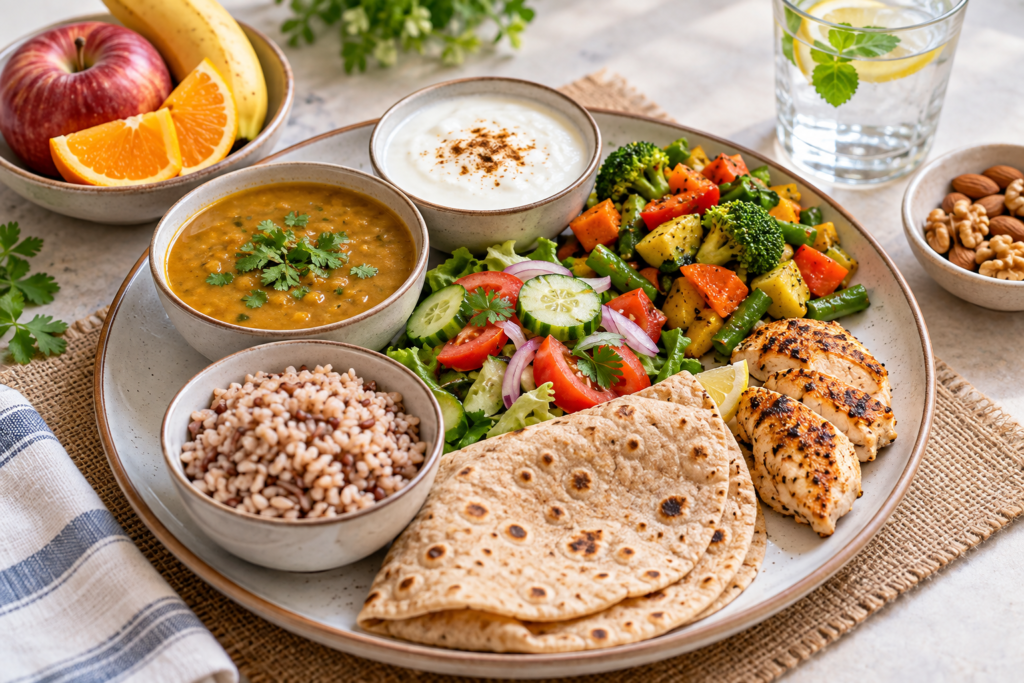
For example, an Indian meal could include vegetables or salad, dal or another protein source, roti made from whole grains or an appropriate portion of rice, and curd. The exact combination and quantity should depend on individual energy needs, preferences and health goals.
Variety is also important. Try rotating different vegetables, pulses, grains, nuts, seeds and protein sources through the week rather than eating the same foods every day. WHO and FAO emphasize dietary diversity and adapting healthy diets to individual needs, cultural practices and locally available foods.
A Simple Meal Checklist
- Include vegetables or fruit.
- Add a protein source such as dal, beans, eggs, dairy, fish, poultry, nuts or seeds.
- Choose a fibre-rich carbohydrate such as whole grains, oats, millets or legumes.
- Include an appropriate amount of unsaturated fat.
- Choose water or another suitable low-sugar beverage instead of sugary drinks.
- Adjust portion sizes according to your energy needs and activity level.
Healthy Eating Is About the Overall Pattern
You do not need to make every meal perfect to eat healthily. An occasional dessert, restaurant meal or favourite snack can fit into an overall balanced eating pattern.
The more important goal is to make nutritious foods the foundation of your usual diet and to avoid regularly consuming excessive amounts of foods high in free sugars, salt or unhealthy fats. WHO recommends limiting free sugars, salt and saturated and trans fats as part of a healthy diet.
Foods to Limit for Better Health
Healthy eating is not about completely banning particular foods. However, regularly consuming large amounts of foods high in free sugars, salt, saturated fat or industrially produced trans fat can make it harder to maintain a healthy dietary pattern. The goal is to reduce these foods and choose more nutritious alternatives more often.
Added and Free Sugars
Sugars added to foods and drinks can contribute significant amounts of energy without providing many essential nutrients. Common sources include sugary drinks, sweets, desserts, biscuits and other sweetened foods.
WHO recommends keeping free sugar intake below 10% of total daily energy intake, with a further reduction to below 5% suggested for additional health benefits. Free sugars also include sugars naturally present in honey, syrups and fruit juices.
Excess Salt
Eating too much sodium can contribute to high blood pressure and increase cardiovascular risk. WHO recommends that adults consume less than 2 grams of sodium per day, equivalent to less than 5 grams of salt.
Be mindful not only of the salt added during cooking but also of packaged foods, savoury snacks, pickles, sauces and other foods that can contain substantial amounts of sodium.
Saturated and Trans Fats
The type of fat matters. Foods containing unsaturated fats, such as nuts, seeds, fish and many plant oils, can be part of a healthy diet. Saturated fats should be limited, while industrially produced trans fats should be avoided as much as possible.
Frequently eating deep-fried foods, commercially baked foods and highly processed snacks can increase exposure to unhealthy fats, particularly when these foods displace more nutritious choices.
How to Make Healthier Food Choices
Small substitutions can make healthy eating easier. Choose water instead of sugary drinks, fruit instead of sweets for some snacks, whole grains instead of refined grains when practical, and home-prepared meals more often when possible.
You do not need to change everything at once. Start with one or two realistic changes and gradually build habits that fit your routine.
How Much Fruit and Vegetables Should You Eat?
Fruits and vegetables are important sources of dietary fibre, vitamins, minerals and other beneficial compounds. Eating a variety of different types can help improve the overall quality of your diet.
WHO recommends that adults and children over 10 years of age consume at least 400 grams, or about five portions, of fruits and vegetables per day.
This does not mean that every meal needs to contain exactly the same amount. You can spread your intake throughout the day—for example, by including vegetables with meals and choosing whole fruit as a snack.
Try to vary the colours and types of vegetables and fruits you eat. Fresh, frozen or appropriately prepared options can all contribute to a healthy diet.
Simple Ways to Increase Your Intake
- Add a vegetable or salad to your main meals.
- Keep whole fruit available for snacks.
- Add vegetables to dal, eggs, soups, curries or other dishes.
- Choose a variety of seasonal fruits and vegetables.
- Use different vegetables and legumes across the week rather than relying on just one or two types.
Simple Healthy Eating Habits for Everyday Life
Healthy eating becomes easier when good choices are built into your routine. You don’t need to change your entire diet overnight. Small, consistent changes can make a meaningful difference to the overall quality of your diet.
Some practical habits include planning meals ahead when possible, keeping nutritious foods readily available, eating a variety of foods and paying attention to portion sizes. Drinking water regularly and limiting sugary drinks can also help reduce unnecessary free-sugar intake.
- Plan some meals in advance.
- Keep fruit, vegetables, pulses and other nutritious foods readily available.
- Include a protein source in your main meals.
- Choose whole grains and other fibre-rich foods when practical.
- Drink water regularly.
- Limit sugary drinks and frequent high-sugar snacks.
- Use salt in moderation and be mindful of high-sodium packaged foods.
- Avoid making extreme dietary changes without a clear reason.
- Focus on consistency rather than trying to eat perfectly every day.
When Should You Get Personalised Nutrition Advice?
General healthy-eating principles can be useful for most people, but they do not replace individual dietary advice when specific health or nutritional needs are present.
Consider speaking with a qualified healthcare professional or registered dietitian if you have a medical condition that affects your diet, significant or unexplained weight changes, a diagnosed nutritional deficiency, food allergies or intolerances, or specific nutritional requirements during pregnancy, childhood or older age.
Personalised advice may also be useful if you are following a specialised diet, training at a high level, or finding it difficult to meet your nutritional needs through your usual diet. The right dietary approach can vary considerably according to individual characteristics, health status, activity level, cultural practices and food availability.
Bottom Line
Healthy eating does not need to be complicated. Focus on variety, balance and moderation: include vegetables and fruits, fibre-rich carbohydrates, protein-rich foods and appropriate sources of healthy fats, while limiting excessive salt, free sugars and unhealthy fats.
Rather than looking for a perfect diet, aim for eating habits that are nutritious, realistic and sustainable over time. Small changes that you can maintain consistently are often more useful than restrictive diets that are difficult to follow.
Medical Disclaimer
Medical Disclaimer: This article is intended for general health education and should not be considered a substitute for individual medical or nutritional advice. Dietary requirements can vary based on age, health conditions, medications, pregnancy, activity level and other individual factors. If you have a specific health concern or require a personalised diet plan, consult a qualified healthcare professional.
Medically reviewed by:
Dr. Priya Darshini Gangwar, MBBS
Trained in Obstetrics and Gynaecology
Need Help With Your Nutrition?
If you have questions about your health, nutrition or weight management, consider discussing your concerns with a qualified healthcare professional.